5 min
5 min 159 ppl
Once the grain leaves the field, another critical stage of the production cycle begins: cleaning, quality assessment and, importantly, storage.
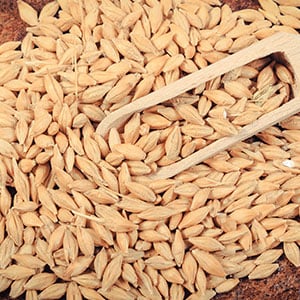
For malting barley, proper storage is essential. The grain must retain not only its physical integrity but also its ability to germinate evenly — a fundamental requirement for controlled malting.
At Grainrus farms, the 2026 malting barley harvest began on 3 August and has now been successfully completed. With the harvest finished, the next stage begins: preparing the grain for storage and subsequent processing.
Why Malting Barley Requires Careful Post-Harvest Handling
Malting barley is a biologically active raw material. Physiological processes continue after harvest, while unfavourable storage conditions can create an environment for microbial growth and pest activity.
Freshly harvested grain is not necessarily ready for malting. It first needs to undergo primary cleaning and enter a controlled storage period. One of the natural characteristics of newly harvested barley is grain dormancy, a biological mechanism that prevents premature germination.
As storage progresses, the physiological condition of the grain gradually changes. Its readiness for germination is therefore assessed using specific tests before storage, during storage and immediately before the planned start of malting.
Storage is thus much more than simply keeping grain until it is needed. It is an important part of maintaining and managing the quality and physiological condition of malting barley.
Moisture: A Critical Factor in Grain Storage
Post-harvest handling starts with moisture control. Excessive moisture increases the risk of microbial growth and insect activity and can ultimately compromise germination capacity.
For long-term storage, a moisture content of around 13% or lower is generally used as a reference for malting barley. The exact drying and storage regime, however, depends on factors such as initial moisture content, intended storage duration and the conditions at the storage facility.
Drying is not simply about removing excess moisture. It must be carried out without compromising the grain’s viability. Excessive drying temperatures can reduce germination capacity, so drying conditions are selected to achieve the required storage stability while preserving the barley’s malting potential.
Why Is Stored Grain Cooled?
Temperature management is another important element of grain storage. After the grain enters storage, controlled cooling helps slow the development of insects and microorganisms and allows temperature gradients within the grain bulk to be managed.
Cooling is normally initiated soon after grain is placed into storage. For conventional grain, a temperature below 15°C can serve as a reference during the first weeks after harvest.
Malting barley, however, requires a more specific approach. Excessive cooling can increase the risk of secondary dormancy and delay the recovery of the grain’s germination capacity. For this reason, malting barley is generally not cooled below 10°C.
The objective is not simply to achieve the lowest possible temperature, but to maintain conditions that support both safe storage and the future malting performance of the grain.
Understanding Barley Dormancy
Grain dormancy is one of the reasons why malting does not necessarily begin immediately after harvest.
Immediately after harvest, a proportion of the grain may naturally remain dormant. This biological mechanism prevents premature germination while the grain is still on the plant.
During post-harvest maturation, dormancy gradually decreases and the grain becomes increasingly capable of germinating. Research on malting barley has shown that the rate at which dormancy is released depends on storage conditions, including temperature.
However, accelerating this process is not the sole objective. Excessively high temperatures can accelerate both the release from dormancy and undesirable ageing processes in the grain. Effective storage therefore relies on maintaining a controlled balance rather than simply maximising the rate of maturation.
This is why germination capacity is assessed before barley enters the malting process.
What Is Monitored After Harvest?
Malting barley is subject to more stringent quality requirements than grain intended for uses such as animal feed. A combination of physical, chemical and physiological parameters is assessed to determine whether a batch is suitable for malt production.
| Parameter | Relevance to malting |
|---|---|
| Germination capacity | Indicates how consistently the grain can germinate during malting |
| Moisture content | Affects grain stability and storability |
| Kernel size and uniformity | Influence the uniformity of water uptake and germination |
| Protein content | Affects the properties and technological value of the resulting malt |
| Damaged and skinned kernels | May absorb water and germinate differently from intact kernels |
| Lot cleanliness | Foreign material and damaged grain can compromise the technological properties of the raw material |
These parameters must be considered as a whole. Target values depend on the requirements of the individual malt house, the intended malt specification and the characteristics of the grain.
Kernel size is particularly important because different fractions absorb water and germinate at different rates. For this reason, barley is cleaned and screened by kernel size before steeping to promote more uniform processing.
From Barley to Malt
Once the grain has been cleaned, conditioned and confirmed to meet the required quality parameters, it can proceed to the malting process.
Malting comprises three principal stages:
steeping → germination → kilning
During steeping, the grain takes up water and its moisture content rises to a level that initiates the physiological processes associated with germination. Temperature, moisture and aeration are carefully controlled to promote uniform development throughout the grain.
During germination, enzymes involved in endosperm modification are activated and synthesised. Cell walls are broken down, while the protein–carbohydrate matrix of the endosperm is modified. These changes make the starch more accessible to enzymatic breakdown during the subsequent mashing process in the brewhouse.
Once the required degree of modification has been achieved, germination is stopped by kilning.
The kilning regime is critical: it preserves the desired enzymatic potential while also contributing significantly to the colour and flavour profile of the finished malt.
Malt Quality Starts in the Field
The quality of malt is not determined at a single stage of production. It is the result of a chain of interconnected factors — from barley variety and growing conditions to harvest, post-harvest handling, storage and the malting process itself.
The chain can be simplified as follows:
variety → field → agronomic practices → harvest → post-harvest handling → storage → malting → malt → beer
For malting barley, achieving a high yield is therefore only part of the objective. Equally important is preserving the grain characteristics that enable it to perform consistently throughout the subsequent stages of processing.
For Grainrus’s agricultural division, this means that the work does not end when the harvest campaign is completed. The harvested barley becomes the raw material for the next stage of the production chain — malt manufacturing.
Ultimately, the journey of malting barley begins in the field, but its quality is shaped throughout the entire chain that follows. The way grain is handled and stored after harvest plays an important role in determining how consistently and predictably it will perform at the malt house.