5 min
5 min ppl
ppl
Today, oilseeds are one of the most profitable and dynamically developing segments of the Russian agricultural sector.** Growing global demand for vegetable oils and plant-based protein makes this sector strategically important not only for domestic consumption but also for the country's export potential. Amid climate change and economic realities, oilseeds often serve as a "lifeline" for farmers, ensuring high production profitability.
What are oilseeds?
Oilseeds are a group of plants cultivated for the purpose of extracting fatty oils from their seeds or fruits. The main criterion for classifying a plant in this group is the high fat content in its seeds (typically ranging from 20% to 60% or more), provided that extracting this fat is economically viable.
The primary uses of the resulting raw materials fall into three categories:
- Food - production of refined and unrefined oils, margarines, mayonnaises, and confectionery fats.
- Feed- this utilizes the by-products of pressing: press cake and meal. These are extremely valuable sources of protein for livestock and poultry farming.
- Industrial - production of biofuels (biodiesel), paints, varnishes, soap-making, and pharmaceutical products.
Main oilseed crops in Russia
Russia possesses a unique potential for cultivating a wide range of oilseeds. The structure of sown areas is dominated by the "big three": sunflower, soybean, and rapeseed, but niche crops have also been gaining popularity in recent years.
Let's take a closer look at each crop:
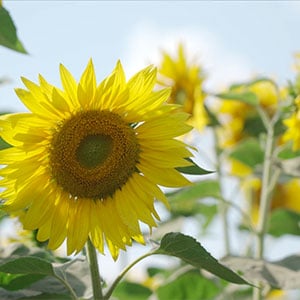
Sunflower
The undisputed leader in Russian fields, occupying over 70% of all oilseed acreage. Russian sunflower is valued for its high oil content and the excellent taste qualities of the finished product. A trend in recent years has been the cultivation of high-oleic varieties, whose oil composition is similar to olive oil.
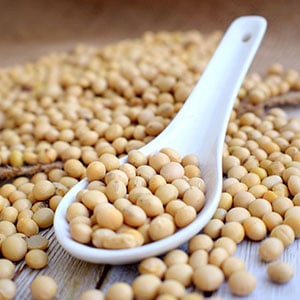
Soybean
A key crop for global agribusiness, often called the "perfect bean." In Russia, it is valued primarily for its high protein level, essential for producing compound feed. Domestic demand for soybean meal is steadily growing alongside the development of meat livestock farming.
Rapeseed
A crop with enormous export potential. Rapeseed oil (known as canola in its food-grade version) is widely used in Europe for biodiesel production and is also actively purchased by China for food purposes.
Other crops
For example, oilseed flax (curly flax), camelina, and mustard. Flax, for instance, is one of the highest-margin export crops and does not require complex growing conditions.
Geography of oilseed cultivation
The choice of region for sowing directly depends on the climatic requirements of the specific plant: the sum of active temperatures and humidity levels. Thanks to its vast territory, Russia can effectively cultivate different types of oilseeds across various climate zones.
1. Southern Federal District
Primarily used for growing sunflowers. Hot summers and chernozem soils create ideal conditions for this heat-loving crop to ripen.
2. Central Chernozem Region
A region that is versatile in terms of conditions, where sunflowers, soybeans, and rapeseed are all successfully grown. This area is seeing the most intensive growth in soybean acreage, which is gradually displacing traditional grains.
3. Siberia and the Far East
The Far East is the historical homeland of Russian soybeans, ideally suited to the humid monsoon climate. Siberia, meanwhile, has become a center for rapeseed production, as this crop (especially its spring varieties) is cold-resistant and matures during the short Siberian summer.
Oilseeds remain the foundation of financial stability for many agricultural enterprises. They not only ensure the country's food security in the vegetable oil segment but also support livestock farming with a feed base. Cultivation and processing technologies are constantly improving, allowing Russia to remain one of the key players in the global food market.